Shadow Stick & Stone Sundials: Solar Timekeeping Science
Harness the earth’s rotation and solar shadow casting to tell precise astronomical solar time with stones and gnomons.
Earth’s Planetary Rotation & Solar Shadows
Scientific Insight
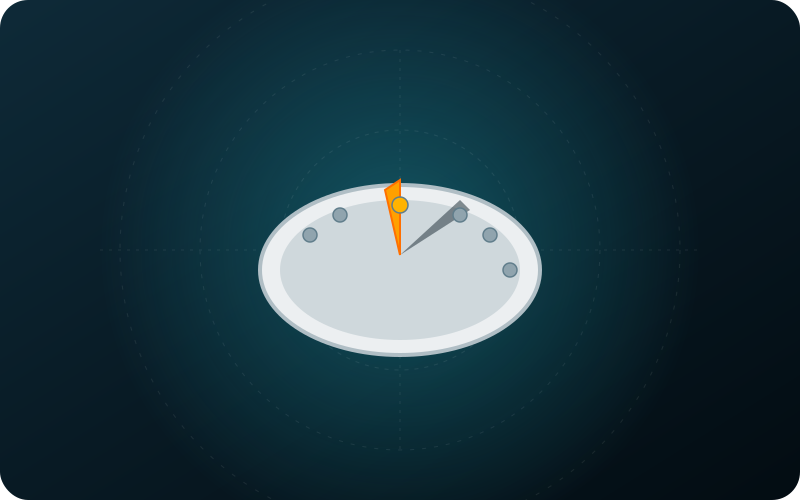
As Earth rotates 15 degrees per hour from west to east, the sun appears to move across the sky, casting shadows that sweep clockwise in the Northern Hemisphere (the origin of clock hands!).
Ecological Value
Reconnects children with cosmic solar rhythms independent of digital battery-powered clocks.
Developmental Skills & Physical Milestones
Angular Shadow Geometry
Observing how shadow length shrinks to its shortest point at Solar Noon when the sun is highest in the sky.
Hourly Time Calibration
Setting a timer every 60 minutes to place and label the next hour stone accurately.
Celestial Latitude Tilt Adjustment
Angling the gnomon stick toward true North at an angle equal to your city’s latitude.
Gather materials from nature, your recycling bin, or household kitchen supplies before heading outdoors.
- Straight wooden stick or dowel (12 to 18 inches long) as the gnomon
- 12 flat river stones or wooden blocks
- Paint pens or sidewalk chalk
- Directional magnetic compass
- Smartphone or clock for calibrating hourly marks
- Clay or bucket (to hold gnomon upright if on patio)
Step-by-Step Play Blueprint
Follow these 5 guided steps. Let your child take the lead in modifying and experimenting with the rules as play unfolds.
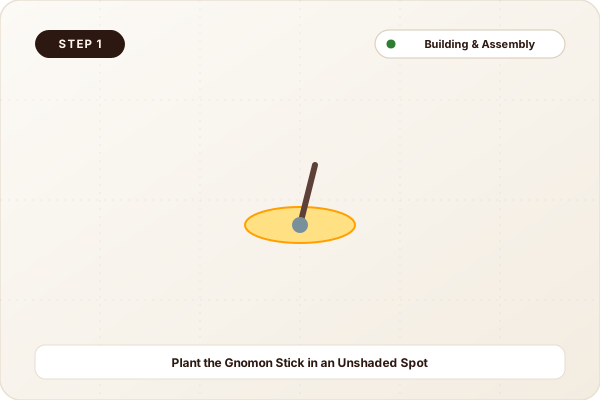
Plant the Gnomon Stick in an Unshaded Spot
Find a backyard spot that receives unobstructed sun from 8 AM to 6 PM. Press a straight stick vertically into the lawn, or anchor upright in a pot of clay.
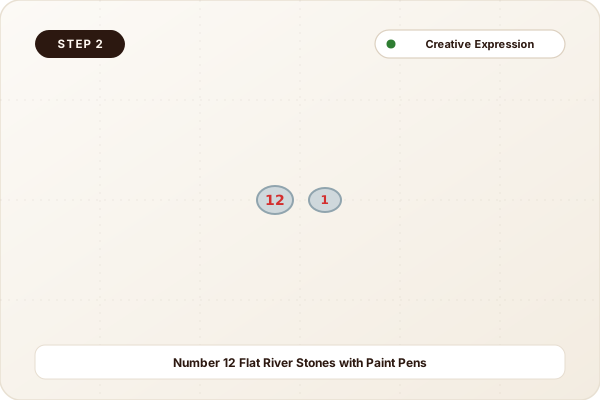
Number 12 Flat River Stones with Paint Pens
Paint numbers from 7 AM to 6 PM on 12 smooth river stones using bright, waterproof paint markers.
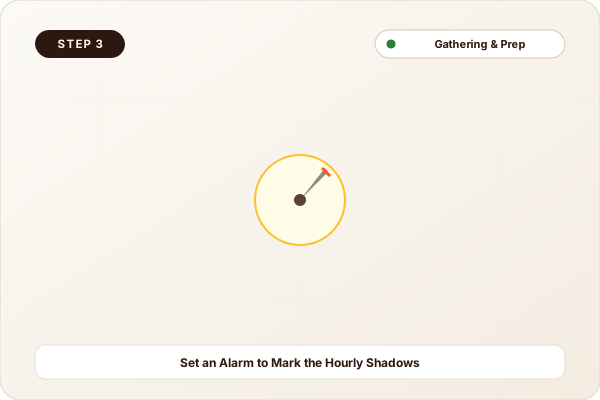
Set an Alarm to Mark the Hourly Shadows
On a clear sunny day, set an alarm on your phone for every hour on the hour (e.g., 9:00 AM, 10:00 AM, 11:00 AM).
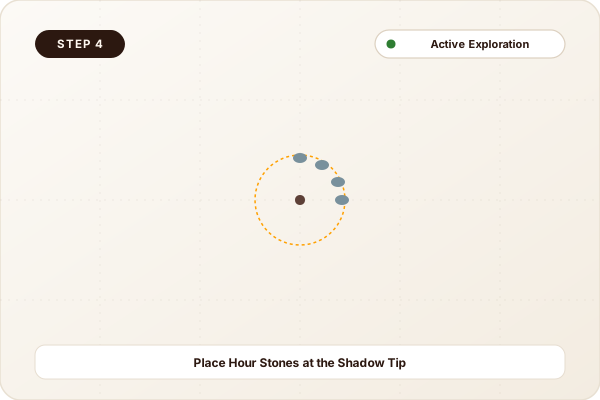
Place Hour Stones at the Shadow Tip
When the timer chimes, find where the shadow of the gnomon tip falls. Place that hour’s stone directly on the shadow tip, or draw a chalk ray on the patio.
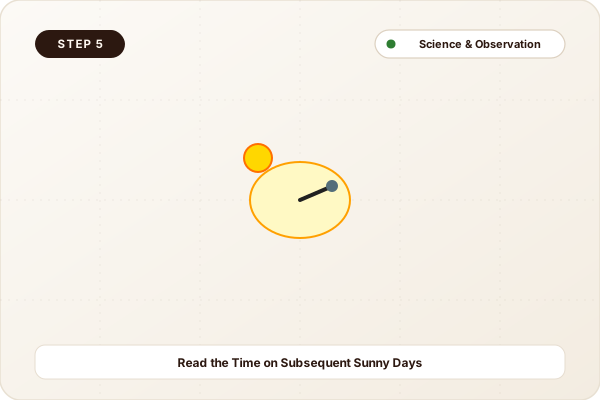
Read the Time on Subsequent Sunny Days
The next sunny day, look at your sundial without checking any watches: wherever the shadow points reveals the exact solar time of day!
Remind children never to stare directly at the bright sun while studying shadows.
Fostering Autonomy & Calculated Risk
Building a sundial is a mind-expanding milestone. Children suddenly realize that clocks are not arbitrary machines; they are reflections of Earth spinning through space.
More Outdoor & Garden Activities
View All 65
DIY Backyard Weather Stations: Rain Gauges, Vanes & Barometers

Aerodynamic Garden Pinwheels: Kinetic Wind Sculptures