Recycled Backyard Water Walls: Gravity Maze Engineering
Mount upcycled bottles, flexible tubes, and churning wheels to an outdoor lattice fence to build a repeatable fluid maze.

Gravity-Driven Fluid Trajectories
Scientific Insight
Water exhibits laminar and turbulent flow depending on tube curvature, channel diameter, and vertical drop incline.
Ecological Value
Celebrates circular upcycling by turning single-use household beverage containers into durable educational STEM equipment.
Developmental Skills & Physical Milestones
Spatial Engineering Iteration
Testing bottle alignments to ensure cascading water catches cleanly without splashing off-target.
Problem Solving & Hypothesis Testing
Re-angling tubes when water spills prematurely or fails to reach the lowest bucket.
Fine Motor Tool Assembly
Looping and tightening zip ties through fence lattices builds dexterity and finger strength.
Gather materials from nature, your recycling bin, or household kitchen supplies before heading outdoors.
- Upcycled clear plastic bottles (water, soda, milk jugs)
- Outdoor wood fence, trellis, or freestanding pallet
- Zip ties, screw hooks, or bungee cords
- Utility scissors / box cutter (adult use)
- Funnel cones, old pool noodle sections & tubing
- Collection buckets & measuring pitchers
Step-by-Step Play Blueprint
Follow these 5 guided steps. Let your child take the lead in modifying and experimenting with the rules as play unfolds.
Cut Inlets and Spouts in Recycled Bottles
Have an adult cut large rectangular intake windows into the sides and remove bottoms of assorted clear plastic jugs and bottles.
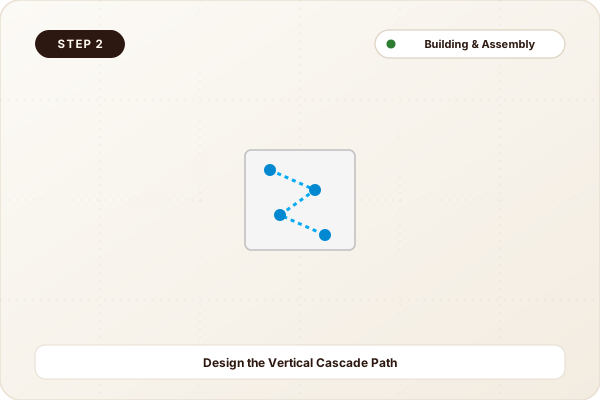
Design the Vertical Cascade Path
Lay bottles against a trellis or wooden pallet in a zigzag pattern, sketching where water should enter top left, cascade right, drop center, and exit bottom.
Fasten Components Securely with Zip Ties
Thread zip ties through holes in bottle tops and loop tightly around fence slats. Clip off excess zip tie tails with wire cutters.
Conduct the First Hydraulic Run
Hand your child a pitcher of colored water. Pour into the top funnel and track the liquid as it chutes, loops, spins a bottle cap wheel, and splashes into the basin.
Implement a Closed-Loop Recycling Circuit
Place a catch bucket at the bottom. Use the collected water to refill the top pitchers, showing how a closed watershed operates.
All cutting of plastic bottles should be done by adults. Secure freestanding pallets firmly with ground stakes so they cannot tip over.
Fostering Autonomy & Calculated Risk
This project is a masterclass in open-ended iteration. Children will spend hours rearranging channels to make water perform new acrobatic twists.