
How to Build a Mechanical Cardboard Automata
Turn Scrap Boxes into Moving Cam-and-Follower Story Machines
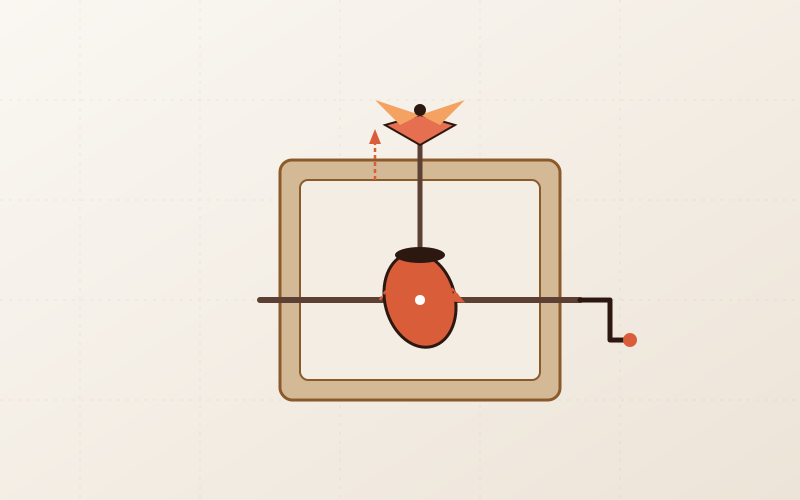
Household Scraps & Tools Needed
Assembly Instructions (5 Steps)
Follow each step carefully. Work together to clean waste, score precise cuts, align pivots, and test kinetic mechanics.
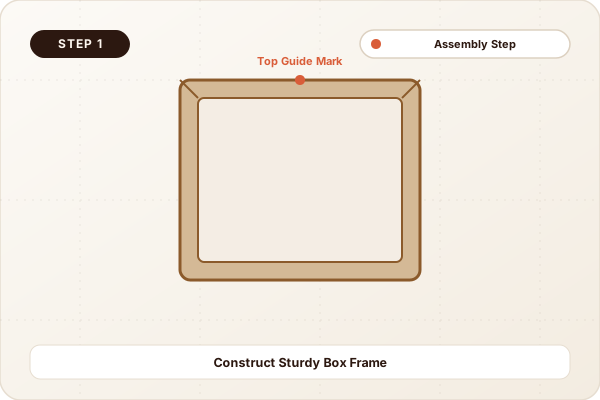
Construct the Sturdy Box Frame
Cut a rectangular cardboard box open on one side to create an open display stage (approx. 18cm wide, 18cm tall, and 10cm deep). Reinforce the corner joints with glue.
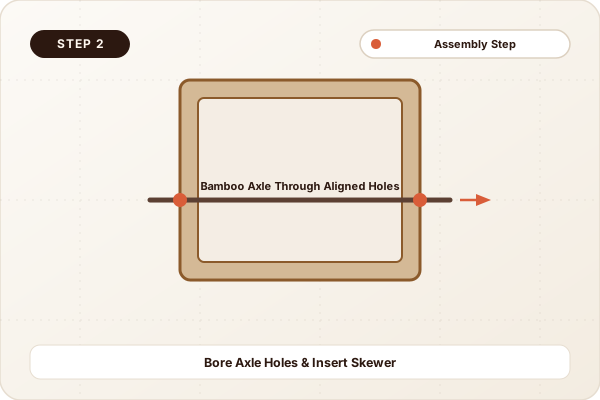
Install the Guide Sleeve & Axle Holes
Pierce two aligned axle holes through the left and right side walls, 5cm above the base. Pierce a vertical hole in the center of the top ceiling and glue a 3cm drinking straw inside as a follower guide sleeve.
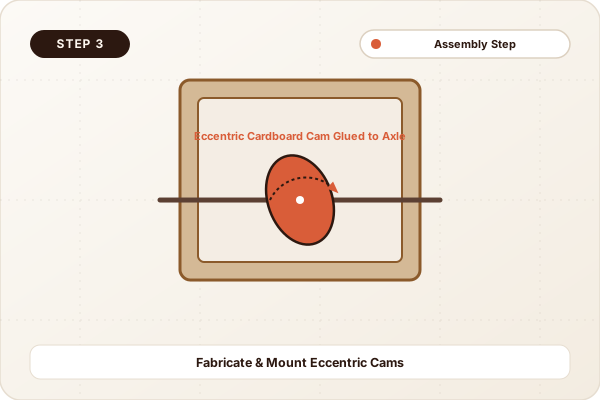
Craft the Eccentric Cam & Follower Disc
Cut two 4cm cardboard circles. Pierce one skewer through the first circle 1cm off-center to make an eccentric cam. Glue the second circle horizontally to the bottom of the vertical follower skewer.
Mount the Axle & Add the Hand Crank
Slide the horizontal skewer through the frame sides and secure the cam in position with small cardboard collars and glue. Bend and glue a small L-shaped cardboard handle to the protruding axle end.
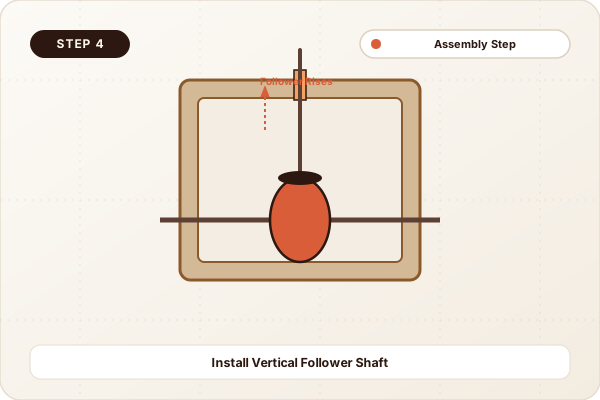
Attach Kinetic Character & Test
Insert the vertical follower rod down through the top straw so the follower disc rests atop the cam. Glue your illustrated character (like a flying dragon or jumping whale) to the top of the rod and turn the crank.
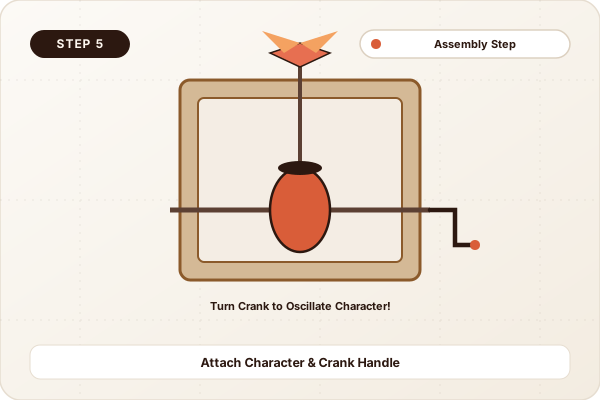
Rotational to Linear Motion Conversion
An automata converts rotary input motion (turning the hand crank) into reciprocating linear motion (the figure moving up and down) using an eccentric cam and a sliding follower shaft.
By changing the shape of the cam (round, egg, or snail-shaped), you can create jumping, undulating, or pausing movement patterns.
Skills Your Child Develops with This Project
Spatial 3D Mechanics
Visualizing how perpendicular axles interact to transfer rotational kinetic energy.
Iterative Engineering
Tuning friction, follower weight, and alignment tolerances through trial and adjustment.
Narrative Expression
Designing custom characters, flying birds, or swimming fish atop the mechanical output rod.
Fun Family Experiments & Mini-Games
The Multi-Cam Synchrony Challenge
Add a second cam with a different shape (pear vs. circle) along the axle to create a dual-character dancing scene with alternating rhythms.
Speed-Governor Test
Count how many full crank revolutions your character can sustain smoothly in 30 seconds without the follower jumping off-track.
Parent Note:
This classic STEAM project teaches linkages and mechanisms. Guide your child when puncturing axle holes with skewers, and celebrate the moment kinetic motion clicks.
More Upcycled Projects in Cardboard & Box Engineering & Beyond
DIY Multi-Tier Cardboard Marble Run & Gravity Spiral
Engineer a multi-tier gravity run using toilet paper rolls, shipping boxes, and paper cup funnels to explore friction, slopes, and momentum.
How to Build an Upcycled Cardboard Pinball Machine
Construct a desktop arcade pinball game using a cereal or shoe box lid, rubber-band spring flippers, popsicle stick bumpers, and marble deflectors.
DIY Syringe Hydraulic Crane Arm & Cardboard Gripper
Build an articulated hydraulic robotic crane arm powered by recycled medical syringes, plastic tubing, and water to lift and move objects with fluid pressure.