Handmade DIY Outdoor Toys: Twig Catapults, Kazoos & Stilts
Craft simple mechanical catapults, elderberry wood whistles, and coffee can balancing stilts from yard materials.

Elastic Potential Energy & Simple Lever Machines
Scientific Insight
Rubber bands store mechanical energy when stretched (elastic potential energy) and release it instantly as kinetic projectile energy according to Hooke’s Law.
Ecological Value
Instills self-reliance by teaching children that toys can be engineered with their own hands rather than purchased from toy stores.
Developmental Skills & Physical Milestones
Vestibular Balance on Stilts
Holding tight tension ropes while lifting feet to walk atop elevated metal cans.
Trajectory Aiming Calibration
Pulling catapult levers back at varied angles to hit bucket targets across the lawn.
Tool Knot-Tying & Binding
Fastening rubber bands tightly around twig fulcrums without slippage.
Gather materials from nature, your recycling bin, or household kitchen supplies before heading outdoors.
- Fallen Y-shaped branches or strong straight twigs
- Heavy-duty rubber bands and hair elastics
- Empty metal tin cans or sturdy plastic buckets (for stilts)
- Sturdy nylon cord or clothesline rope (6 feet)
- Bottle caps or plastic spoons (for catapult buckets)
- Pompoms, marshmallows, or acorns for soft ammunition
Step-by-Step Play Blueprint
Follow these 5 guided steps. Let your child take the lead in modifying and experimenting with the rules as play unfolds.
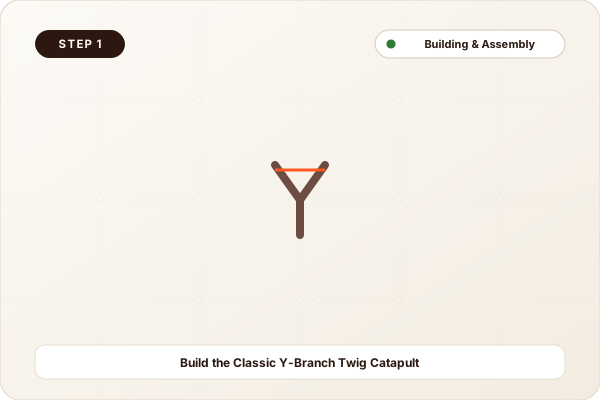
Build the Classic Y-Branch Twig Catapult
Find a sturdy Y-shaped fallen branch. Lash a horizontal cross-twig across the arms. Attach a plastic spoon or bottle cap with rubber bands to form a springy catapult lever.
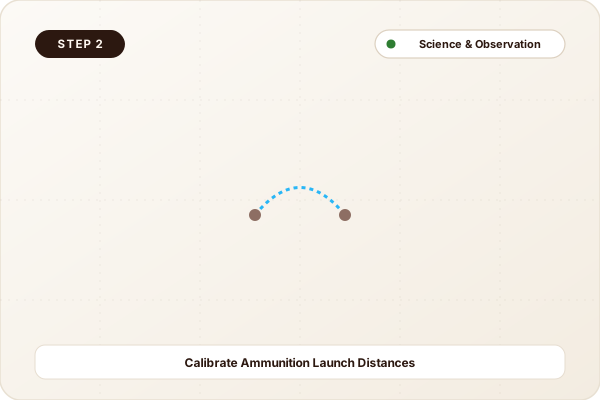
Calibrate Ammunition Launch Distances
Place a soft marshmallow or pompom in the spoon bucket. Pull back, release, and measure how far it flies! Experiment with pulling back 30 degrees vs. 60 degrees.
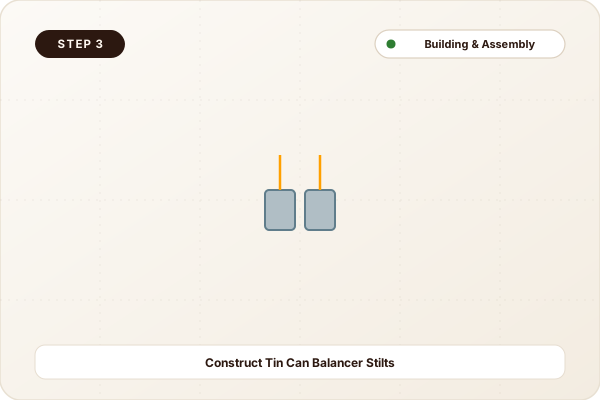
Construct Tin Can Balancer Stilts
Poke two holes near the closed bottom rim of two empty, clean metal soup or coffee cans. Thread sturdy nylon rope through each, knotting ends inside to make handle loops matching child height.
Master the Elevated Stilt Walk
Step onto the cans, pull upward firmly on the hand ropes to keep cans stuck to feet, and walk across the grass: "CLUMP, CLUMP, CLUMP!" like a friendly giant!
Make Vibrating Broad-Leaf Grass Kazoos
Hold a broad flat blade of grass stretched tight between the bases of your two thumbs. Blow sharply between the knuckles: the blade vibrates like a saxophone reed with a loud squawking BUZZ!
Smooth all sharp can edges with a metal file and heavy duct tape. Walk stilts on grass rather than smooth slippery tile.
Fostering Autonomy & Calculated Risk
Handmade toys teach children how things work from the inside out. The immense pride of walking on stilts they built themselves surpasses any store-bought gadget.
More Outdoor & Garden Activities
View All 65
Clue-Based Backyard Treasure Hunts: Cryptic Riddles & Caches
Hand-Drawn Pirate Treasure Maps: Tea-Stained Cartography