Forest Flora & Pebble Nature Sorting: Taxonomy Trays
Classify forest treasures by color, weight, texture, and botanical species using wooden sorting trays and balance scales.

Linnaean Taxonomy & Discrete Attribute Classification
Scientific Insight
Scientific classification groups items by shared homologous attributes (color, size, texture, biological family). Grouping builds foundational cognitive schema.
Ecological Value
Noticing the infinite variations within a single biological species (e.g., no two oak leaves are identical).
Developmental Skills & Physical Milestones
Attribute Discrimination (Size, Weight, Color)
Sorting leaves into gradients from light lime green to deep dark forest green.
Pincer Grasp Tweezing
Using wooden tweezers to pick up small acorns exercises fine-motor writing muscles.
Set Theory & Venn Diagram Logic
Placing items that are BOTH "Smooth" AND "Brown" into the overlapping circle of a chalk Venn diagram.
Gather materials from nature, your recycling bin, or household kitchen supplies before heading outdoors.
- Sectioned wooden tray, muffin tin or printed Venn diagram mat
- Wooden balance scale or kitchen scale
- Foraged natural materials (pebbles, leaves, acorn caps, pinecones, twigs)
- Magnifying glass & child tweezers
- Chalk or sorting category cards
Step-by-Step Play Blueprint
Follow these 5 guided steps. Let your child take the lead in modifying and experimenting with the rules as play unfolds.
Collect a Diverse Basket of Natural Loose Parts
Take a 15-minute foraging stroll to gather 30+ varied natural items: smooth stones, jagged bark, pinecones, seed pods, feathers, and varied leaves.
Sort by Sensory Texture in Compartment Trays
Label muffin tin cups: "Rough", "Silky", "Prickly", "Bumpy", "Brittle". Have your child place each specimen into its matching textural home.
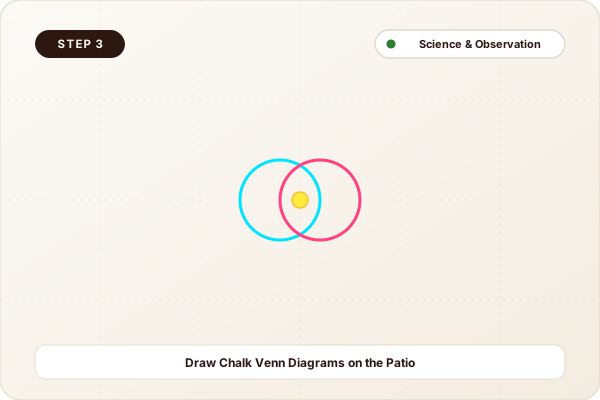
Draw Chalk Venn Diagrams on the Patio
Chalk two overlapping circles on the patio: Circle A = "Heavy", Circle B = "Float in Water". Test each item in a water bucket to find which belongs in the center overlap!
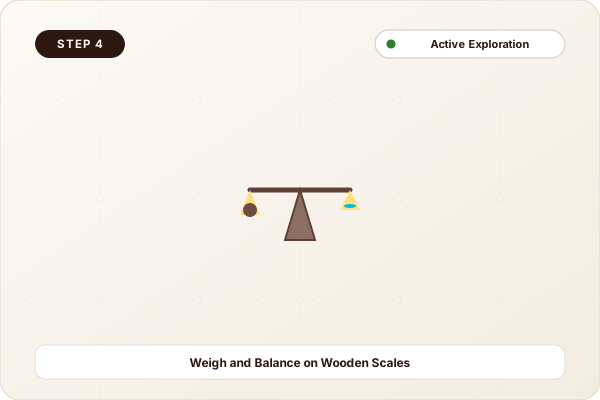
Weigh and Balance on Wooden Scales
Place 5 small river stones on one side of a balance scale. How many pinecones are needed on the other side to bring the scale into perfect horizontal equilibrium?
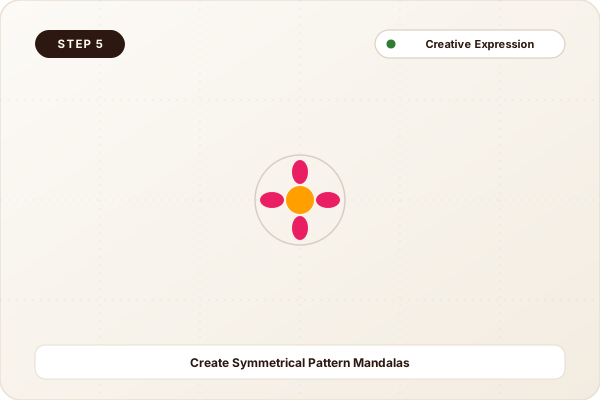
Create Symmetrical Pattern Mandalas
Use sorted piles to lay out repeating ABA or AAB geometric rows (Pinecone, Pebble, Leaf, Pinecone, Pebble, Leaf) across the table.
Supervise younger toddlers closely to prevent small pebbles or acorns from being placed in mouths.
Fostering Autonomy & Calculated Risk
Nature sorting satisfies children’s natural developmental urge for order and classification. It turns ordinary forest floor debris into an exquisite Montessori math lesson.
More Outdoor & Garden Activities
View All 65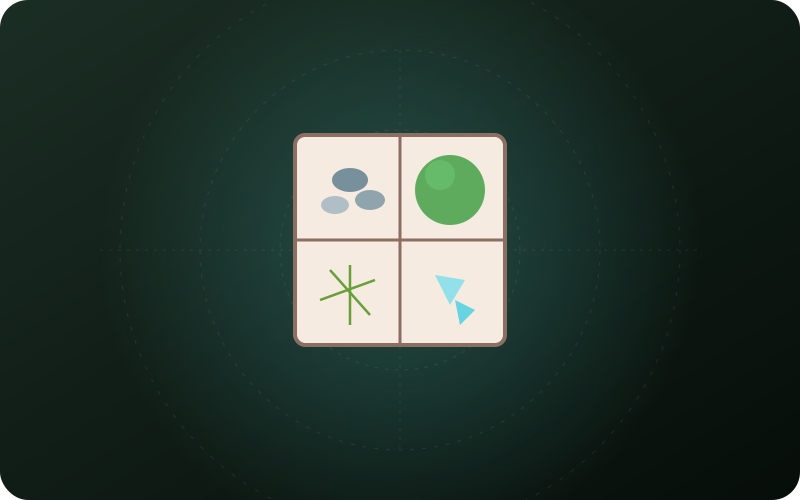
Tactile Outdoor Sensory Play: Scent Potions & Texture Paths
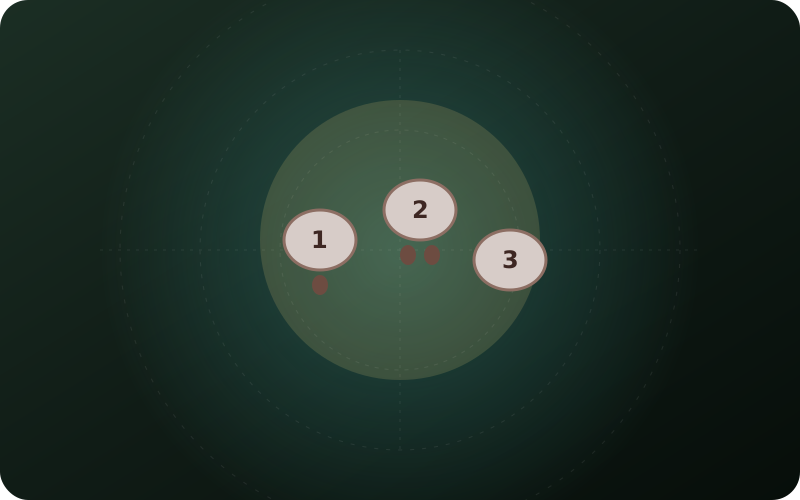
Pinecone & Stone Outdoor Counting Games: Nature 10-Frames