Pinecone & Stone Outdoor Counting Games: Nature 10-Frames
Learn one-to-one number correspondence and addition using sidewalk chalk 10-frames, pinecones, and acorns.
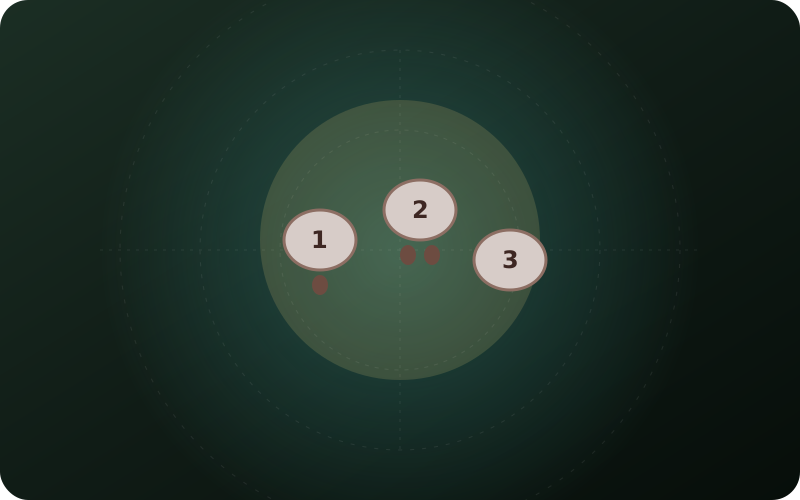
Concrete-Representational-Abstract (CRA) Math Model
Scientific Insight
Children grasp mathematical quantities best when they manipulate tangible 3D objects (concrete) before seeing drawn tally marks (representational) and abstract digits (abstract).
Ecological Value
Demonstrating that nature provides infinite, zero-cost counting manipulatives.
Developmental Skills & Physical Milestones
One-to-One Number Correspondence
Touching exactly one pebble for each spoken number word without skipping.
Subitizing (Instant Visual Recognition)
Recognizing a group of 3 or 4 pinecones at a glance without counting one by one.
Gross Motor Number Hopping
Jumping along a chalk number line from 1 to 10 strengthens kinesthetic number sense.
Gather materials from nature, your recycling bin, or household kitchen supplies before heading outdoors.
- Sidewalk chalk (for drawing giant 10-frames)
- Natural counters (50 acorns, pinecones, or smooth river stones)
- Numbered wooden slices or index cards (1 to 20)
- Large foam dice
- Child gathering basket
Step-by-Step Play Blueprint
Follow these 5 guided steps. Let your child take the lead in modifying and experimenting with the rules as play unfolds.
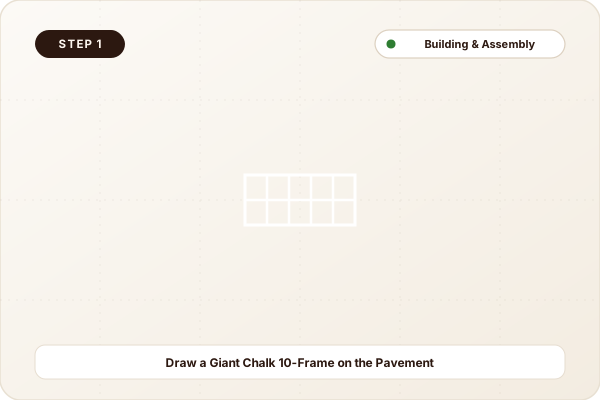
Draw a Giant Chalk 10-Frame on the Pavement
Chalk a large 2x5 rectangular grid on the driveway (each square large enough for a child to stand in). Explain that 10 frames help our eyes see groups of ten.
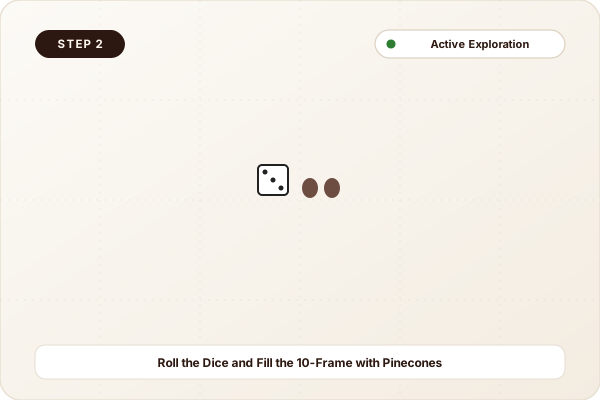
Roll the Dice and Fill the 10-Frame with Pinecones
Have your child roll an oversized foam die. If it rolls a 6, they must sprint to the basket, count out 6 pinecones, and place one in each box from left to right.
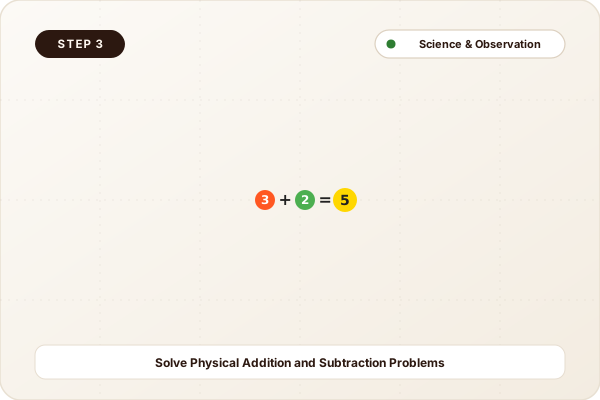
Solve Physical Addition and Subtraction Problems
Place 4 smooth river stones in the grid. Ask: "How many more stones do we need to make 10?" Have the child fill empty boxes to discover that 4 + 6 = 10!
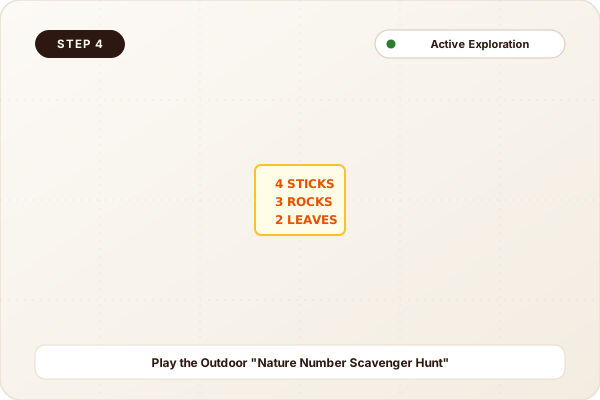
Play the Outdoor "Nature Number Scavenger Hunt"
Hand child number cards: "Find 3 smooth stones, 4 curly oak leaves, 5 dandelions, and 2 long sticks." Bring finds back and line them up beside cards.
Draw a Giant Chalk Number Line for Hopscotch Math
Draw a number line from 0 to 20. Call out: "Start at 5 and leap forward 3 steps: what number do you land on?" (8!).

Ensure driveway is safe from vehicle traffic. Play in fenced areas or quiet cul-de-sacs.
Fostering Autonomy & Calculated Risk
Children who struggle with indoor math worksheets frequently excel when math is taken outdoors. Moving the body while counting engages muscle memory and eliminates math anxiety.
More Outdoor & Garden Activities
View All 65
Tactile Outdoor Sensory Play: Scent Potions & Texture Paths

Forest Flora & Pebble Nature Sorting: Taxonomy Trays