
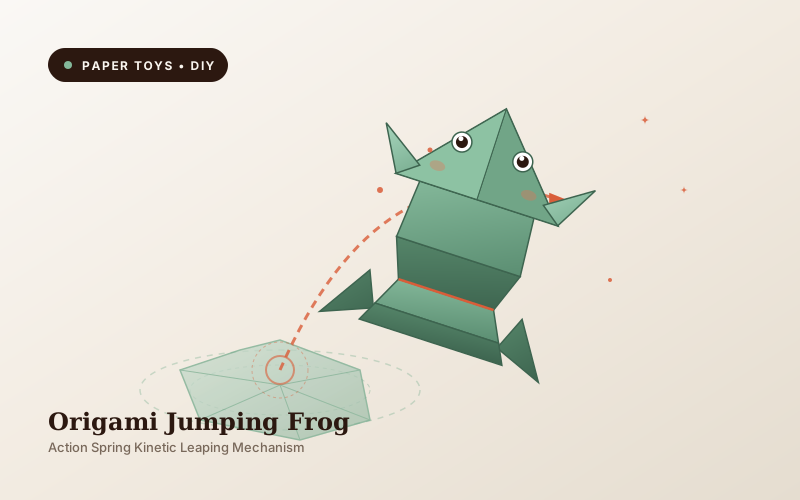
How to Create an Origami Jumping Frog
Classic Action Origami with Built-In Spring Mechanism
What You Need Before Starting
Folding Instructions (5 Steps)
Follow each step in order. Press your folds firmly against the table using your thumbnail or a ruler for maximum performance.
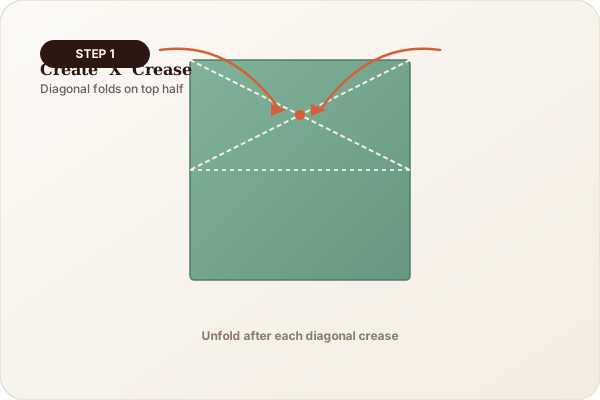
Create the "X" Creases
Start with your square sheet colored side up. Fold the top half down into a rectangle, crease and unfold. Then fold the top left corner diagonally down to the right edge, crease and unfold. Repeat with the top right corner. You now have an "X" crease on the top half.
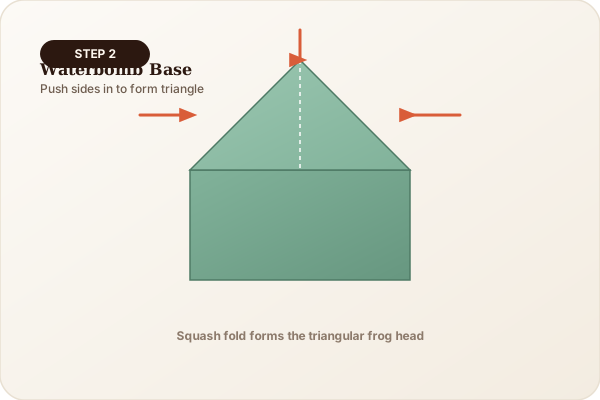
Collapse into Waterbomb Triangle Head
Push both sides of the "X" inward toward each other while pressing the top edge down. The paper will naturally collapse into a 3D triangle (Waterbomb base) sitting on top of the bottom rectangle.
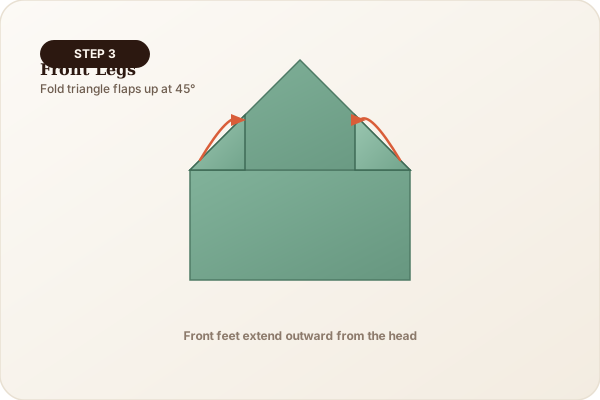
Fold the Front Legs
Take the left and right flap tips of the top triangle and fold them upwards at a 45-degree angle toward the top peak. These form the frog’s front legs.
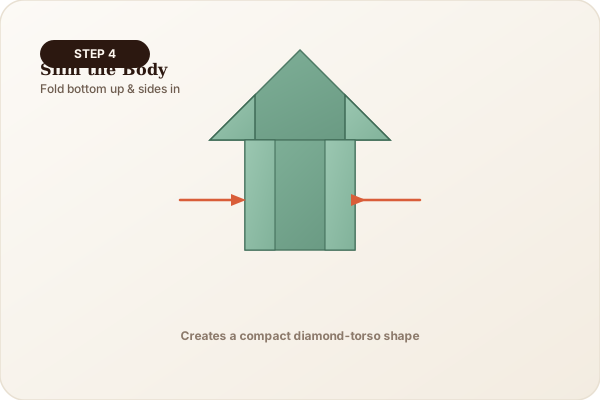
Body Slimming & Rear Formation
Fold the bottom rectangular portion upward to meet the base of the triangle. Then fold the left and right outer sides inward toward the vertical center line to make the body slim.
The Spring Mechanism (Accordion Fold)
Fold the entire bottom half upward in half (toward the frog’s head). Then, fold only the bottom half back downward, creating a small "Z" shaped accordion pleat.
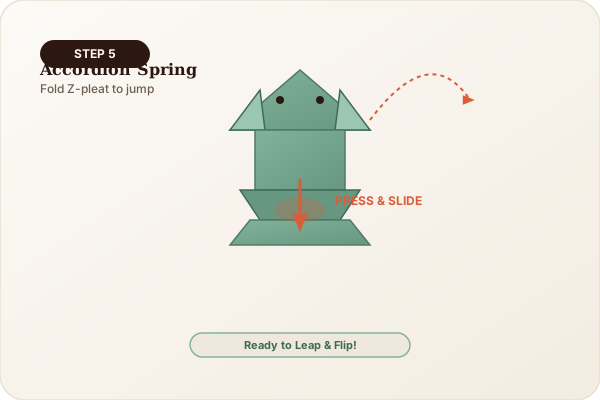
Elastic Potential Energy & Kinetic Spring Release
The stepped pleat fold at the frog’s rear functions like a cantilever spring. When your finger compresses the paper, potential energy is stored in the compacted folds. Releasing your finger quickly transforms that potential energy into upward and forward kinetic energy.
Thicker paper (100–120 GSM) stores more spring tension and results in higher vertical backflips!
Skills Your Child Develops with This Craft
Finger Dexterity & Grip Control
Pressing and releasing the tiny spring flap refines index-finger isolated motor control.
Complex Multi-Step Sequencing
Executing waterbomb base folds teaches procedural memory and precision folding.
Patience & Persistence
Adjusting fold depth until the frog achieves the ideal leap height rewards trial-and-error.
Fun Family Mini-Games to Play
Lily Pad Landing Contest
Draw 3 green paper circles (Lily pads) on the table with numbers 10, 20, 50. Take turns jumping your frogs into the highest-scoring pad.
Frog Somersault Race
Press near the very edge of the rear spring to test if your frog can perform a complete 360-degree mid-air flip and stick the landing.
Parent Note:
Playing with jumping frogs is fantastic for developing turn-taking, fine motor impulse control, and joyful screen-free family laughter.
More Projects in Kinetic & Action Origami & Beyond
How to Create a Traditional Origami Flapping Bird
Fold the iconic Japanese action origami flapping bird whose wings flutter and flap realistically whenever you hold the chest and gently pull its tail.
How to Create a Talking Snap Dragon Puppet
Fold an expressive paper snap dragon puppet with opening and snapping jaws that bites, chomps, and speaks when operated with your thumb and fingers.
How to Create Origami Animal Finger Puppets
Fold charming animal finger puppets with hollow finger sleeves and pointed ears that slip right onto fingertips for puppet theater and story time.