
Dual-Wheel Emotion Expression & Feeling Dial Board
Emotional Granularity, Affective Naming & Self-Regulation Wheels
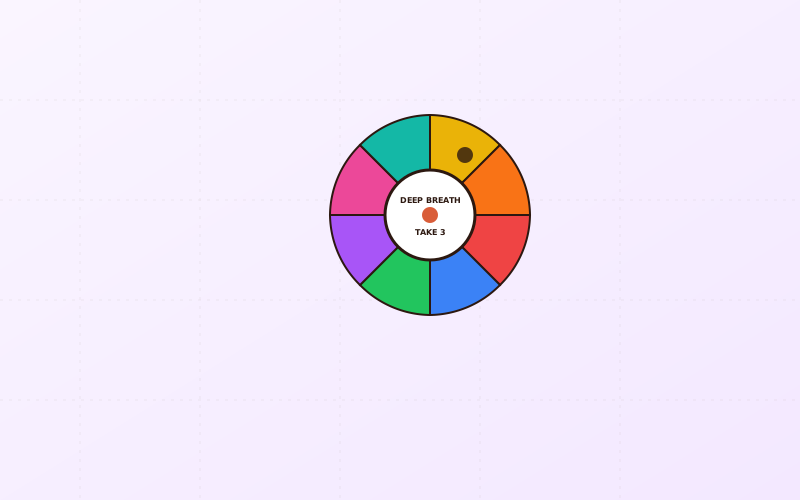
What You Need Before Starting
Assembly & Setup Instructions (5 Steps)
Follow each step in sequence. Encourage your child to participate in measuring, cutting, calibrating, and testing each mechanical and sensorial feature.
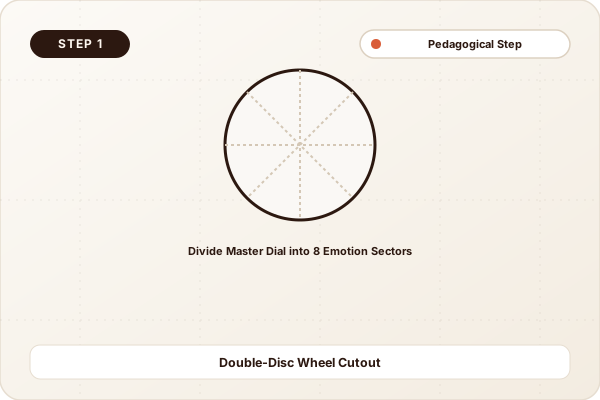
Divide the Master Dial into 8 Emotion Sectors
Use a protractor to divide a 20cm cardboard wheel into 8 equal 45-degree pie wedges. Color-code sectors (Yellow = Joy, Blue = Sadness, Red = Anger, Purple = Fear, Green = Calm, Orange = Frustrated, Pink = Loved, Teal = Anxious).
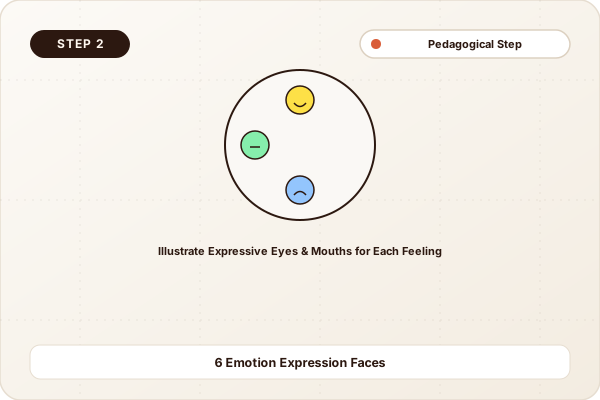
Draw Expressive Character Faces in Each Sector
Draw distinct cartoon faces in each wedge highlighting eyebrow angles, eye shapes, and mouth curves to represent each emotional state clearly.
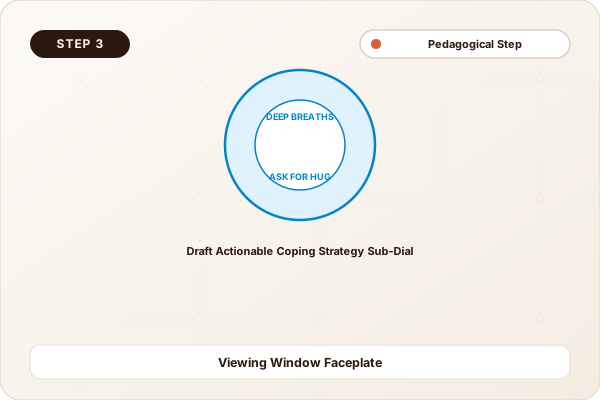
Construct the Calming Strategy Coping Wheel
Cut a smaller concentric wheel (12cm) mounted on top, featuring corresponding calming strategy icons (Take 3 deep belly breaths, Drink cool water, Ask for a hug, Squeeze a cushion).
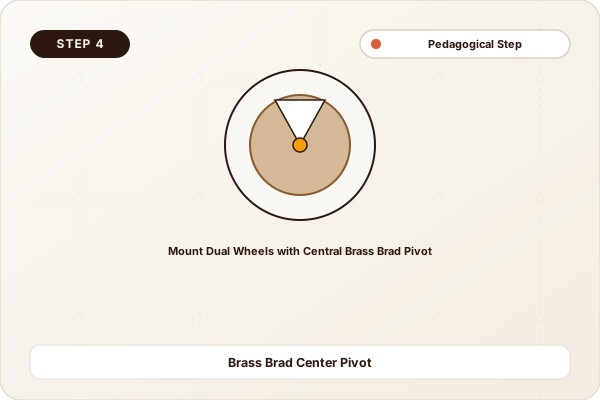
Mount Wheels on a Central Split-Pin Brad
Pierce the center of both wheels and attach them to a decorative cardboard wall backing plate with a split-pin brad so both dials rotate independently.
Implement Daily Morning & Evening "Check-In" Rituals
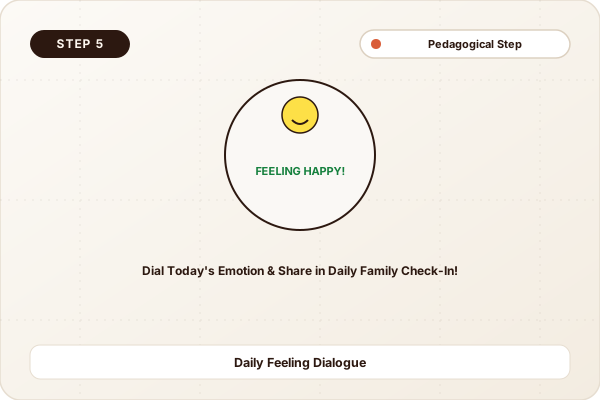
Hang the feeling dial in a bedroom or classroom. Invite children to spin the dial to their current feeling during morning breakfast or bedtime reflection.
Affective Neuroscience & Emotional Granularity
Neuroimaging proves that verbally identifying and visually categorizing an emotion activates the prefrontal cortex, which sends calming inhibitory signals to the amygdala, reducing physical stress arousal.
Developing emotional granularity—moving beyond "happy/mad" to "frustrated", "anxious", "proud", or "overwhelmed"—is the cornerstone of emotional intelligence.
Cognitive Milestones & Skills Developed
Emotional Granularity & Self-Awareness
Expanding emotion vocabulary to identify nuanced feeling states.
Self-Regulation & Calming Strategies
Selecting physical coping actions (deep breathing, stretching, hugging) linked to feelings.
Empathy & Perspective-Taking
Recognizing facial micro-cues (eyebrow angle, mouth shape) on peer expressions.
Fun Family Explorations & Logic Games
The Emotion Charades Mirror Game
One person spins the wheel secretly and acts out the emotion using only facial expressions and body posture for others to guess.
The Storybook Character Detective
While reading a bedtime book, pause and spin the wheel to identify how the main character feels during a difficult plot twist.
Parent & Educator Note:
Dr. Dan Siegel’s famed phrase "Name it to tame it" comes alive with this visual tool. It gives children an expressive voice during overwhelming emotional storms.
More Projects in Social-Emotional & Speech Tools & Beyond
Creative Narrative Storytelling & Imagination Dice Cubes
Construct a 6-die narrative generator cube set featuring characters, settings, plot obstacles, magic items, feelings, and resolutions to inspire spontaneous creative storytelling.
Slow-Viscosity Nebula Calming Mind Bottle
Construct a mesmerizing slow-viscosity sensory calming bottle using a clear plastic bottle, warm water, glycerin or clear glue, and multi-layered glitter that settles soothingly.
Expressive Persona Hand Puppets for Dialogue & Conflict Resolution
Create articulated persona hand puppets from upcycled socks, felt expressions, and cardboard mouth plates to practice conflict resolution, active listening, and social scripts.