
Sensory Stepping Stones & Low-Profile Balance Beam
Vestibular System, Proprioception & Core Postural Stability
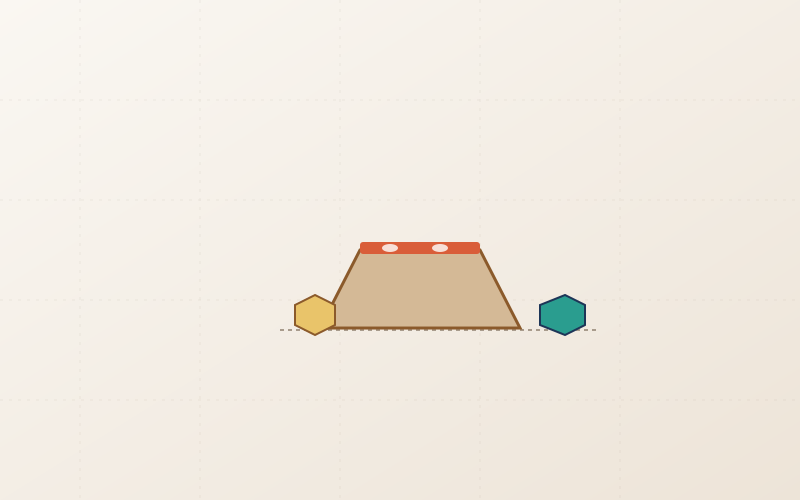
What You Need Before Starting
Assembly & Setup Instructions (5 Steps)
Follow each step in sequence. Encourage your child to participate in measuring, cutting, calibrating, and testing each mechanical and sensorial feature.
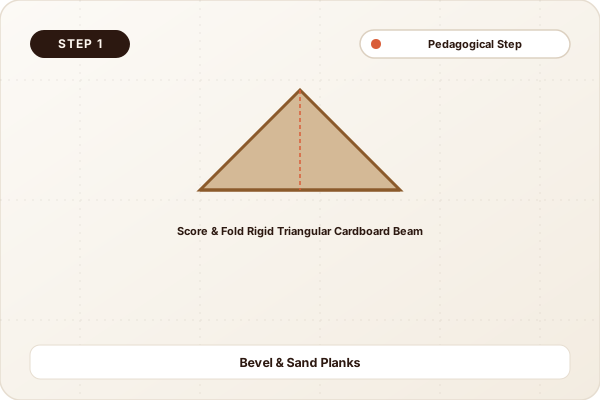
Fold Rigid Triangular Cardboard Beams
Cut 60cm x 30cm sheets of heavy cardboard. Score lengthwise into three 10cm folds and fold into a rigid triangular prism beam (10cm wide, 10cm tall).
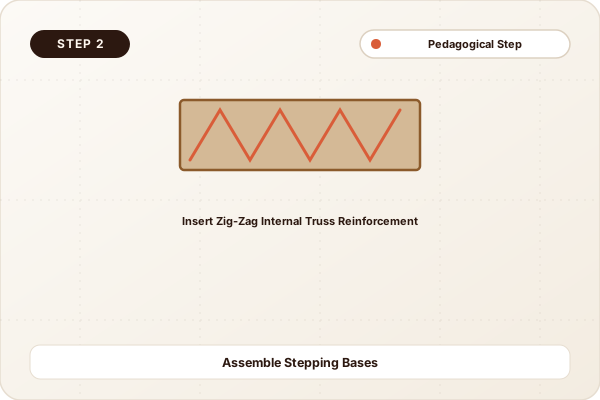
Tape Seams & Reinforce Internal Ribs
Insert corrugated cardboard zig-zag ribs inside the prism for crush resistance, then seal the seam tightly with heavy-duty packing tape.
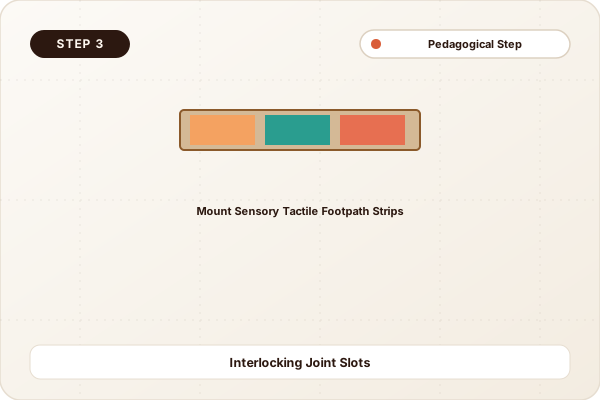
Mount Varied Tactile Walking Surfaces
Glue a different sensory texture onto the top face of each beam section: rough burlap on Beam 1, soft fleece on Beam 2, ribbed corrugated card on Beam 3, and cork on Beam 4.
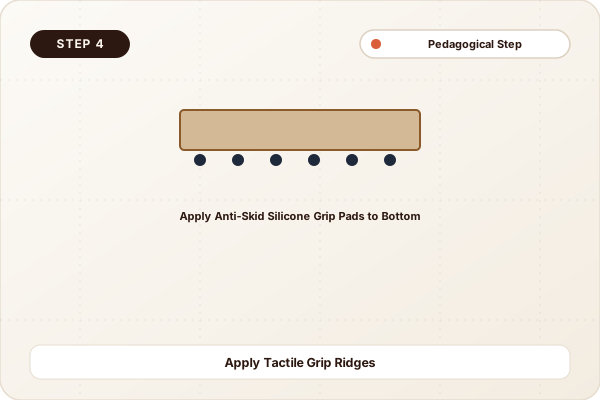
Apply Non-Slip High-Traction Bottom Grips
Glue rubber shelf liner or silicone grip pads along the entire bottom face of each beam to prevent slipping on smooth floorboards.
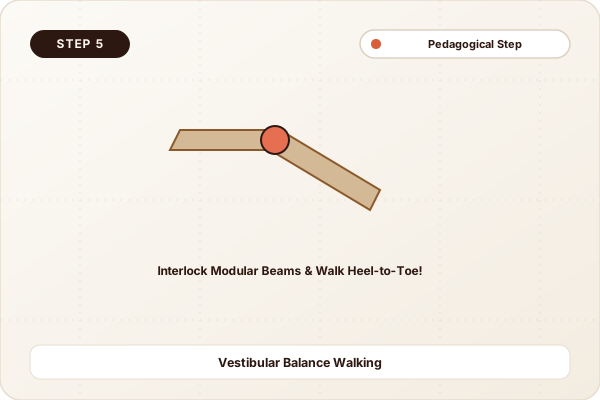
Configure Modular Pathways & Obstacle Courses
Arrange beam sections and hexagonal stepping stones into straight lines, zig-zags, or closed loops for obstacle course floor games.
Vestibular Semicircular Canals & Proprioceptive Feedback
Balancing along narrow beams stimulates the inner ear’s vestibular fluid and joint proprioceptors. The body makes rapid micro-adjustments in core and ankle muscles to keep the center of mass within the base of support.
Walking barefoot over varied low-profile textures strengthens foot arches, improves posture, and enhances sensory integration.
Cognitive Milestones & Skills Developed
Vestibular Balance & Coordination
Maintaining dynamic stability while navigating curved and straight pathway beams.
Proprioceptive Sensory Awareness
Feeling pressure variations underfoot to navigate textured sensory stones.
Motor Planning & Risk Assessment
Calculating stride length and foot placement across separated stepping stones.
Fun Family Explorations & Logic Games
The Blindfolded Sensory Walk
Walk barefoot across 4 textured beam segments with eyes closed and guess each surface material in order.
The Beanbag Head-Balance Crossing
Balance a small beanbag or cloth napkin on top of your head while traversing the entire balance beam path without letting it fall.
Parent & Educator Note:
Low-profile (10cm height) beams provide maximum gross-motor vestibular challenge with zero fall risk. Perfect for rainy day indoor physical play.
More Projects in Montessori & Sensorial & Beyond
Montessori Tactile Texture Sorting Board & Touch Discs
Construct a multi-texture Montessori sensory matching board using corrugated cardboard, burlap, sandpaper, felt, silk, and wood for blindfolded touch matching.
Nature & Geometry Loose-Parts Tinkering Tray
Assemble a partitioned loose-parts sensory tinkering tray filled with pinecones, river stones, geometric wood slices, metal washers, and yarn for open-ended creative construction.
Self-Correcting Number & Shape Pegboard Grid
Build a Montessori-inspired self-correcting pegboard using cardboard layers, wooden dowels, and colored elastic bands that allows children to verify answers independently.