
Montessori Tactile Texture Sorting Board & Touch Discs
Sensory Discrimination, Stereognostic Memory & Fine-Touch Tactile Pathways
What You Need Before Starting
Assembly & Setup Instructions (5 Steps)
Follow each step in sequence. Encourage your child to participate in measuring, cutting, calibrating, and testing each mechanical and sensorial feature.
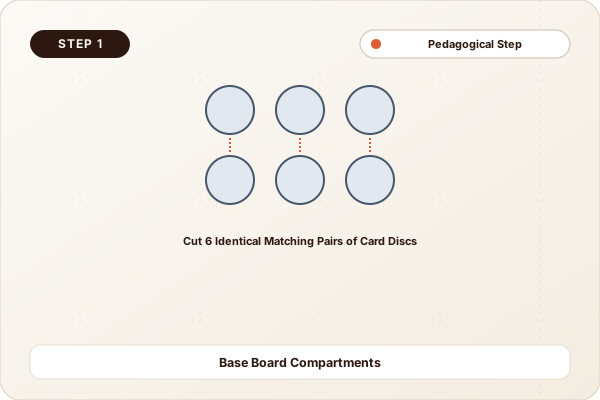
Cut Matching Pairs of Texture Discs
Cut two identical circles from each of your 6 texture materials (sandpaper, felt, burlap, bubble wrap, corrugated card, and smooth card) to make 6 matching pairs.
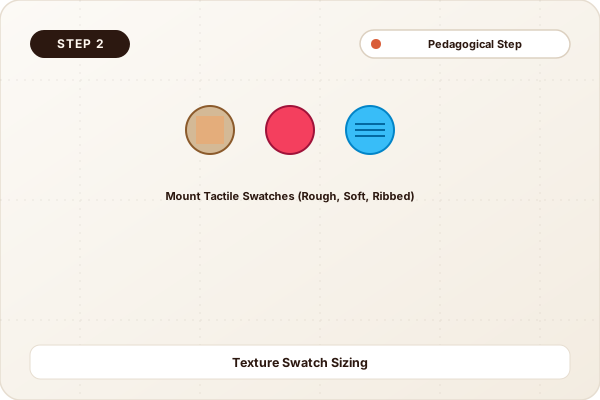
Mount Textures onto Wooden or Cardboard Tokens
Glue one circle of each pair onto round wooden discs or heavy cardboard backing coins. Smooth the edges so only the surface texture is felt.
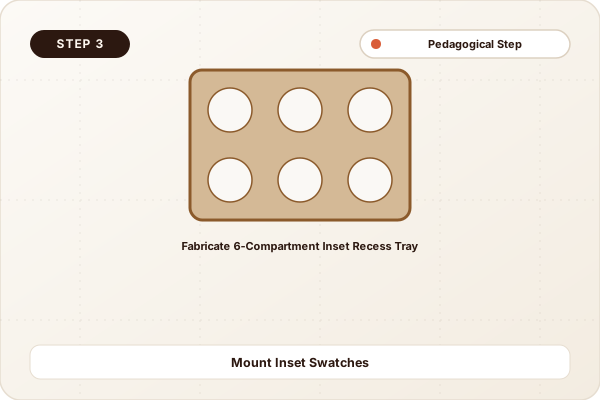
Construct the Master Base Tray Grid
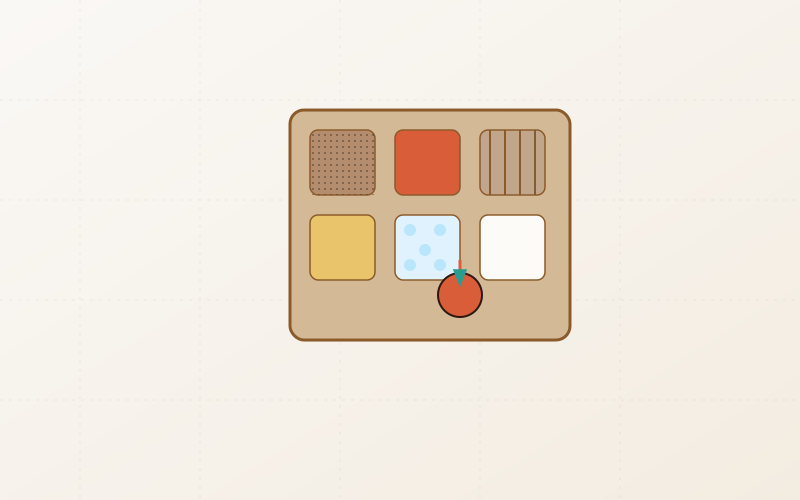
On your large cardboard tray, glue the remaining 6 texture discs in a neat 2x3 grid with circular recessed borders as the master target dock stations.
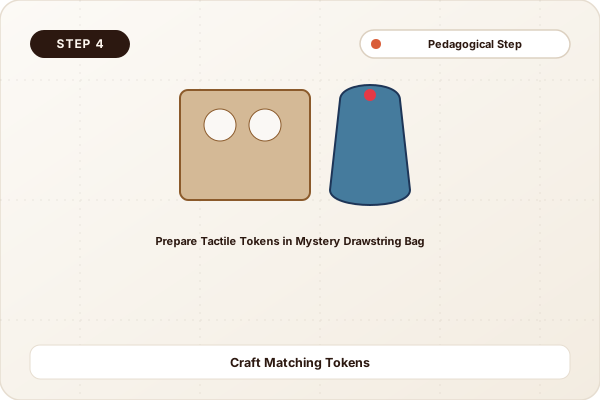
Add Edge Bezels & Drawstring Storage Pouch
Glue 1cm raised cardboard borders around the tray edge so discs do not roll away. Store the matching handheld tokens in a soft fabric mystery pouch.
Conduct Blindfolded Tactile Matching
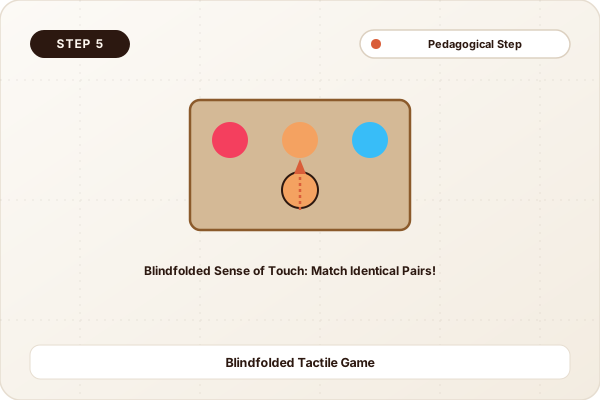
Have the child wear a blindfold, reach into the mystery pouch to feel a disc with fingertips, and then feel across the master board to place it on its matching mate.
Somatosensory Cortex & Stereognostic Perception
Fingertip skin contains dense clusters of Meissner’s and Merkel mechanoreceptors. Touching varied textures sends rich electrical signals to the brain’s somatosensory cortex, building high-resolution tactile memory without visual reliance.
Blindfolded tactile sorting strengthens stereognostic sense—the brain’s ability to identify objects purely through 3D touch and surface friction.
Cognitive Milestones & Skills Developed
Sensory Discrimination & Vocabulary
Learning sensory adjectives: coarse, velvety, ribbed, abrasive, slick, and fibrous.
Pincer Finger Sensitivity
Refining fingertip pressure control necessary for pre-writing pencil grip.
Working Memory & Classification
Matching pairs purely by tactile memory and sorting from roughest to smoothest.
Fun Family Explorations & Logic Games
The Roughness Gradient Ordering
Without using the board, arrange all 6 texture tokens in a straight line from roughest (sandpaper) to softest (velvet) purely by touch.
60-Second Touch-Memory Speed Match
Blindfolded, draw tokens from the mystery pouch and match all 6 pairs on the tray before the 1-minute timer expires.
Parent & Educator Note:
Inspired by Maria Montessori’s sensorial apparatus, this activity builds profound focus and mindfulness while heightening fingertip neural sensitivity.
More Projects in Montessori & Sensorial & Beyond
Nature & Geometry Loose-Parts Tinkering Tray
Assemble a partitioned loose-parts sensory tinkering tray filled with pinecones, river stones, geometric wood slices, metal washers, and yarn for open-ended creative construction.
Self-Correcting Number & Shape Pegboard Grid
Build a Montessori-inspired self-correcting pegboard using cardboard layers, wooden dowels, and colored elastic bands that allows children to verify answers independently.
Sensory Stepping Stones & Low-Profile Balance Beam
Build modular interlocking sensory stepping stones and low-profile balance beams using recycled cardboard, textured tops, and non-slip cork feet for gross-motor agility.