Sensory Nature Scavenger Hunts & Woodland Discovery Quests
Equip young naturalists with tactile visual quest boards to hunt for geometric shapes, textures, and color spectra in nature.

Biodiversity & Ecological Habitat Niches
Scientific Insight
Natural environments are complex layered ecosystems where every fallen log, moss patch, and canopy branch hosts micro-communities.
Ecological Value
Teaches the "Leave No Trace" principle: collect only fallen items and observe living flora without tearing foliage.
Developmental Skills & Physical Milestones
Visual Discrimination
Distinguishing subtle differences between lobed, serrated, and smooth leaf margins.
Tactile Sensory Vocabulary
Describing textures using precise descriptive terms (rough, silky, prickly, spongy, brittle).
Mindful Outdoor Focus
Sustained environmental focus and calm wandering through natural green space.
Gather materials from nature, your recycling bin, or household kitchen supplies before heading outdoors.
- Printed scavenger checklist or illustrated quest card
- Wooden clipboard or stiff cardboard backing
- Magnifying hand lens (3x–5x magnification)
- Egg carton with painted color swatches inside lids
- Cloth gathering pouch or canvas tote bag
- Pencil or crayon for checking off finds
Step-by-Step Play Blueprint
Follow these 5 guided steps. Let your child take the lead in modifying and experimenting with the rules as play unfolds.
Craft the Illustrated Sensory Quest Card
Draw or print simple icons on cardstock: a jagged leaf, a smooth pebble, a spiral snail shell, rough bark, a feather, and a sweet-smelling pine needle.
Prepare the 12-Compartment Egg Carton
Paint the bottom of each egg carton cup a different color (emerald green, autumn gold, slate gray, earth brown, berry red) to serve as a 3D sorting tray.
Set Off Along Shaded Woodland Paths
Walk slowly with magnifying glasses in hand. Prompt children: "Can you spot something older than you?", "Can you find something that feels like velvet?"
Match Natural Treasures into Color Wells
Place found fallen items into their matching egg cup: a yellow dandelion petal in the yellow cup, a gray slate chip in the slate cup.
Show-and-Tell Nature Exhibition
Conclude the walk by gathering on a picnic blanket, examining finds under the magnifier, and sketching favorite specimens in a field notebook.
Teach children to identify poison ivy/oak/sumac ("leaves of three, let them be"). Check socks and legs for ticks after woodland walks.
Fostering Autonomy & Calculated Risk
Nature scavenger hunts shift a routine walk from a passive stroll into a vivid sensory treasure hunt that sparks spontaneous biological inquiry.
More Outdoor & Garden Activities
View All 65
Backyard Garden Scavenger Hunts: Micro-Ecosystem Detectives
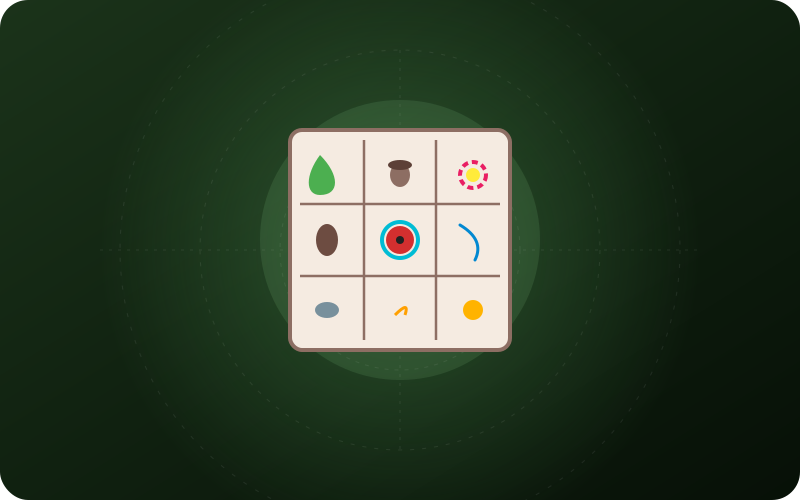
Outdoor Nature Bingo: 4-in-a-Row Outdoor Scavenger Cards